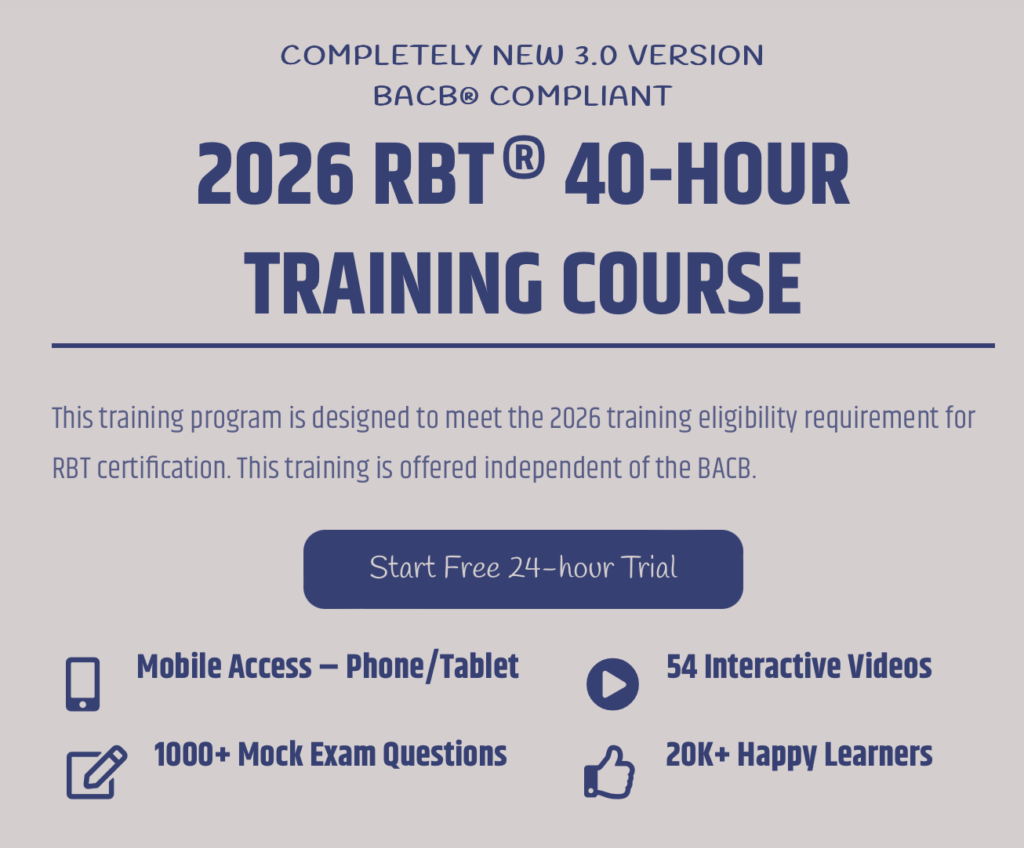
If you’re considering becoming a Registered Behavior Technician, the 40-hour RBT training is your real starting line. It’s the foundation that prepares you for working directly with clients and understanding how applied behavior analysis is used in real-life settings. Knowing what to expect ahead of time makes the process feel a lot more manageable.
The first thing to understand is that this training isn’t just about clocking hours. The goal is to build a solid understanding of why behaviors happen and how to respond to them ethically, safely, and consistently. The content follows the official RBT Task List, which means everything you learn is directly tied to what you’ll need on the job and on the competency assessment.
During the training, you’ll spend a good amount of time learning the basics of behavior analysis. This includes understanding how behavior works, what reinforcement really means, and how data is used to track progress. At first, some of the terminology may feel unfamiliar, but it’s taught in a way that builds gradually. Concepts are repeated and layered so they start to make sense as a whole rather than as isolated definitions.
Another major part of the 40-hour RBT training focuses on skill acquisition and behavior reduction. You’ll learn how behavior plans are implemented, how to follow written instructions from supervisors, and how to support clients as they learn new skills. This is where theory starts to feel practical. You’re not being trained to design treatment plans, but you are being trained to carry them out accurately and consistently.
Ethics and professionalism also play a big role. You’ll cover client dignity, confidentiality, boundaries, and the importance of working within your scope of practice. This part of the training matters more than people expect. In real-world settings, knowing what not to do is just as important as knowing what to do.
Most 40-hour RBT trainings today are offered online, which gives you flexibility. You can usually work through the material at your own pace, pause when needed, and revisit sections that feel challenging. This format works well because it mirrors how people actually learn. Instead of absorbing everything in one long stretch, you’re able to space learning out, which helps with retention.
By the end of the training, you should feel comfortable with the core responsibilities of an RBT. You won’t feel like an expert yet, and that’s normal. The training is meant to prepare you to work under supervision, not independently. Think of it as building confidence and structure before stepping into real-world practice.
After completing the 40 hours, the next steps typically include a competency assessment and the RBT exam. The training gives you the knowledge base, but hands-on experience and supervision are what really bring everything together.
Overall, the 40-hour RBT training is structured, practical, and very intentional. If you go into it expecting steady learning instead of instant mastery, it becomes a lot less intimidating and a lot more valuable.